
Temperature, relative humidity, wind and droplet size determine how much of the mist evaporates before reaching people or surfaces.
Premium Mist Cooling Solution
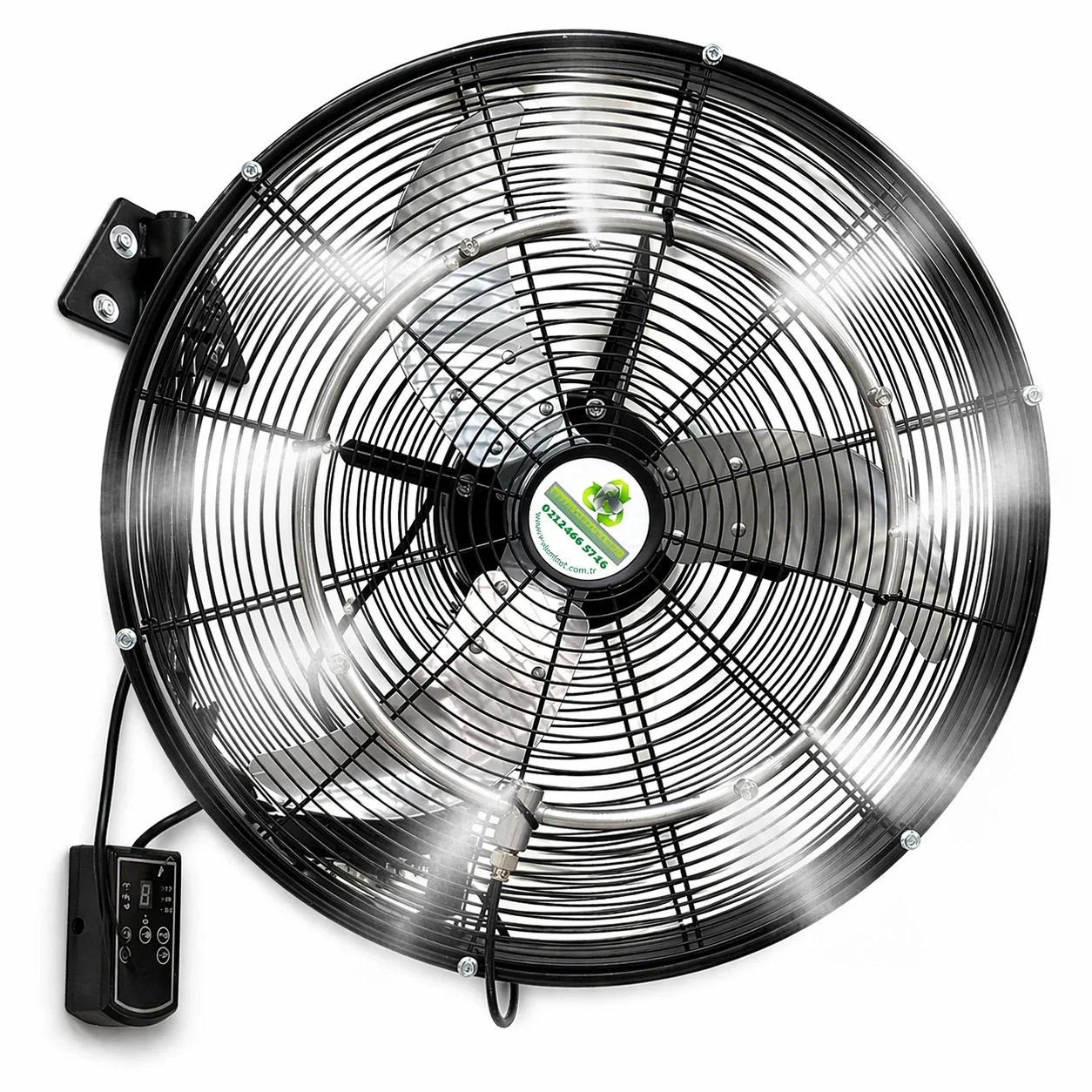
Evaporative Mist Cooling Fan
An evaporative mist cooling fan uses the natural heat absorption of water evaporation together with fan airflow. It is primarily evaluated for open or well-ventilated semi-open areas.
Solution typemist fan, water fan and evaporative mist cooling applications
Focusoutdoor cooling, air comfort and controlled misting
Usagecafes, restaurants, gardens, terraces, hotels, factories, warehouses and event areas
 REAL APPLICATION
FIELD VIDEO • MEGAMIST
See Evaporative Mist Cooling Fan in a Real Application
Watch airflow, fine mist distribution and practical outdoor cooling performance related to Evaporative Mist Cooling Fan. The video opens inline without leaving the product page.
Inline playbackPrivacy enhancedMobile optimized
What Is an Evaporative Mist Cooling Fan?
The system atomizes water into small droplets and introduces them into a moving air stream. As suitable droplets evaporate, they draw heat from the surrounding air. The method does not operate like a sealed refrigerant air conditioner; its performance changes with ambient moisture and ventilation.
Understanding Evaporative Performance
Hotter and drier air generally provides more evaporation potential than already humid air. Crosswind may increase air exchange but can also carry mist away from the target zone. For this reason, site conditions should be observed at the hours when the system is expected to work hardest.
Droplet size and contact time matter. Coarse spray or excessive output can reach surfaces before evaporating, while insufficient airflow may limit distribution. The fan, nozzle, pressure and distance are adjusted together.
Correct model selection
Open-air circulation supports evaporation and prevents moisture from accumulating in an enclosed room.
Professional positioning
Adjustable output helps the operator respond to changing humidity and wind during the day.
How Does Evaporative Mist Cooling Work?
Water is filtered and atomized, then carried through the air by the fan. Evaporation converts sensible heat into latent heat, which can make the moving air feel cooler under suitable conditions. The system does not guarantee a fixed temperature reduction, because weather and layout vary from site to site.
Outdoor cooling support
Semi-open business areas
Nozzle-assisted misting
Strong air circulation
Evaporative Fan Design Considerations
Review local humidity patterns, shade, wind, ventilation, water quality, nozzle characteristics, fan airflow and the sensitivity of nearby surfaces or equipment. The design should avoid making unsupported temperature claims and should set realistic expectations for the climate.
Water hygiene and maintenance are essential. Filters, tanks or lines and atomizing points require a documented cleaning routine so performance does not decline through deposits or contamination.
Project note: Evaporative performance depends on humidity, airflow, droplet size, water pressure, wind and placement. The system should be configured for the actual operating conditions rather than a fixed temperature claim.
REAL APPLICATION PHOTOS
Explore Mist Cooling Systems in Real Projects
Review real application images of mist fans and cooling systems used in cafés, restaurants, industrial facilities and outdoor areas.


Application process
Evaporative Cooling Assessment Process
Climate and air movement are evaluated before equipment quantity or water output is proposed.
Climate and Exposure Review
Observe temperature, humidity, shade and wind at the busiest operating times.
Evaporation and Surface Check
Identify sensitive finishes, electronics and distances needed for droplets to evaporate.
Fan and Atomization Design
Choose airflow direction, water preparation, nozzle arrangement and adjustable output controls.
Seasonal Commissioning
Test in realistic conditions and establish filter, nozzle, line or tank maintenance intervals.
Related services
Compare Evaporative Mist Cooling Fan with Related Fan Solutions
Review the related pages to distinguish evaporative mist cooling fan from other water-assisted, misting and industrial airflow options.
Frequently asked questions
Evaporative Mist Cooling Frequently Asked Questions
These answers clarify where evaporative cooling works best and why results vary with weather.
Is evaporative mist cooling the same as air conditioning?
No. It is an open-air process based on water evaporation and airflow, so it does not control a sealed room to a fixed set point.
Does humidity affect performance?
Yes. Air that already contains more moisture generally has less evaporation potential, so output and expectations should be adjusted.
Can a fixed temperature drop be guaranteed?
A universal value should not be guaranteed without measured site conditions. Weather, wind, shade, droplet size and placement all affect the result.
How is surface wetness controlled?
Use fine atomization, suitable pressure, adequate distance, correct fan angle and output adjustment based on current humidity and wind.
What water treatment is required?
Filtration is selected according to water quality and nozzle requirements. Regular filter and atomizer maintenance is also necessary.
Which areas are appropriate?
Café terraces, gardens, event areas and other open or well-ventilated semi-open zones may be suitable after climate and layout review.
Quote and contact
Assess Climate and Layout for Evaporative Cooling
Share the location, operating months, target hours, area photographs and water source so evaporation potential and practical system options can be evaluated.
CONTACT NUMBERS
0 (532) 282 84 860 (212) 546 55 46