
Tank capacity, refill access, wheel stability and cleaning convenience are central to the selection.
Premium Mist Cooling Solution
Water Fan
A water fan is generally chosen when a mobile fan with its own water supply is preferred over a permanent misting line. It can support temporary seating areas, seasonal venues and locations where the equipment needs to be moved during the day.
Solution typemist fan, water fan and evaporative mist cooling applications
Focusoutdoor cooling, air comfort and controlled misting
Usagecafes, restaurants, gardens, terraces, hotels, factories, warehouses and event areas
 REAL APPLICATION
FIELD VIDEO • MEGAMIST
See Water Fan in a Real Application
Watch airflow, fine mist distribution and practical outdoor cooling performance related to Water Fan. The video opens inline without leaving the product page.
Inline playbackPrivacy enhancedMobile optimized
What Is a Water Fan?
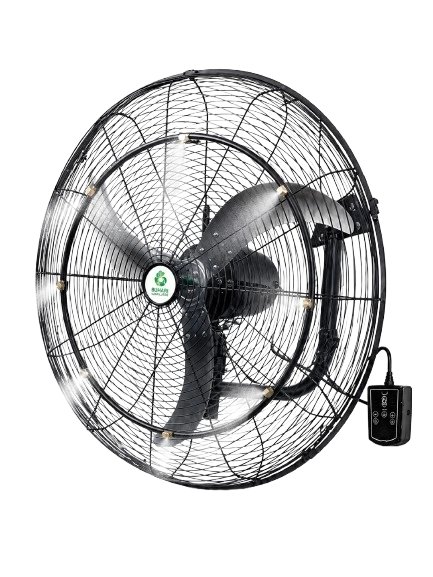
A water fan is a portable fan that uses stored water to add a cooling or humidifying effect to its airflow. Designs vary: some use a misting ring, while others use an internal atomizing mechanism. Because the water source travels with the unit, operation does not necessarily depend on a nearby fixed pipe connection.
Using a Water Fan in Flexible Outdoor Layouts
Water fans are useful where seating, workstations or event zones change frequently. The unit can be repositioned, but the floor must remain level and the power cable must not cross pedestrian routes. Refill access and the weight of a full tank should also be considered before choosing the operating point.
The strongest comfort effect should be aimed through the occupied area rather than directly at one table or workstation. Oscillation, distance and water output need to be adjusted as ambient humidity and wind change during the day.
Correct model selection
Integrated storage avoids permanent water-line work for short-term or seasonal use.
Professional positioning
A clear refill, drain and cleaning routine helps protect water quality and equipment hygiene.
How Does a Tank-Fed Water Fan Work?
Water is drawn from the built-in reservoir and delivered to the atomizing or nozzle section while the fan produces airflow. The exact mechanism depends on the model, so operating pressure and droplet size should not be assumed from the product name alone. The tank, pump, hoses and fan controls must all be checked as one mobile unit.
Outdoor cooling support
Semi-open business areas
Nozzle-assisted misting
Strong air circulation
What to Check Before Choosing a Water Fan
Review tank volume, expected run time, refill method, drain location, wheel locks, overall dimensions, fan speed control and access to filters or nozzles. The unit should be practical for staff to move and service without lifting unsafe loads.
Also confirm whether the intended environment tolerates added moisture. Water fans are primarily assessed for open or well-ventilated semi-open areas; sensitive electronics, slippery floors and poorly ventilated rooms require additional caution.
Use note: Water fan planning should account for water supply method, mobility, cleaning access, drainage, operating hours and safe placement around users.
Application process
Water Fan Selection and Setup Process
The project plan should cover mobility, water handling and safe daily use as well as airflow.
Movement Route Assessment
Check doors, ramps, floor levels and storage access to ensure the unit can be moved safely.
Refill and Drain Planning
Identify a clean water source, practical refill schedule and a location for controlled draining and cleaning.
Operating Position Test
Place the fan where oscillation reaches the target zone without blocking service paths or creating cable hazards.
Daily Care Instructions
Define tank hygiene, filter or nozzle checks, shutdown procedure and secure storage after use.
Related services
Compare Water Fan with Related Fan Solutions
Review the related pages to distinguish water fan from other water-assisted, misting and industrial airflow options.
Frequently asked questions
Water Fan Frequently Asked Questions
The following points explain where a tank-fed water fan is practical and what must be managed during operation.
Does a water fan require a plumbing connection?
Many tank-fed models do not require a fixed connection, but the exact water system must be confirmed for the selected model.
How often is the tank refilled?
Refill frequency depends on tank volume, water output and daily operating time. It should be calculated from the actual model and planned work schedule.
Can a water fan be moved while the tank is full?
Only according to the manufacturer’s instructions and site safety conditions. A full tank increases weight, so stable floors, wheel locks and controlled movement are important.
How is the tank kept clean?
Use clean water, avoid long periods of stagnant water, drain the unit when required and follow the equipment-specific cleaning instructions.
Is it suitable for indoor rooms?
It is mainly considered for open or well-ventilated semi-open areas. Indoor use requires a separate humidity, ventilation and electrical-safety assessment.
What details are needed for model selection?
Provide the target area, movement frequency, refill access, operating hours, floor conditions and the preferred storage location.
Quote and contact
Choose a Mobile Water Fan for Your Operating Routine
Share the area plan, expected daily use and refill possibilities so mobility, tank management and airflow can be evaluated together.
CONTACT NUMBERS
0 (532) 282 84 860 (212) 546 55 46