
The integrated reservoir makes deployment simple, but practical performance depends on tank hygiene, refill logistics, operating time, wheel stability and the ability to store the unit safely.
Premium Mist Cooling Solution
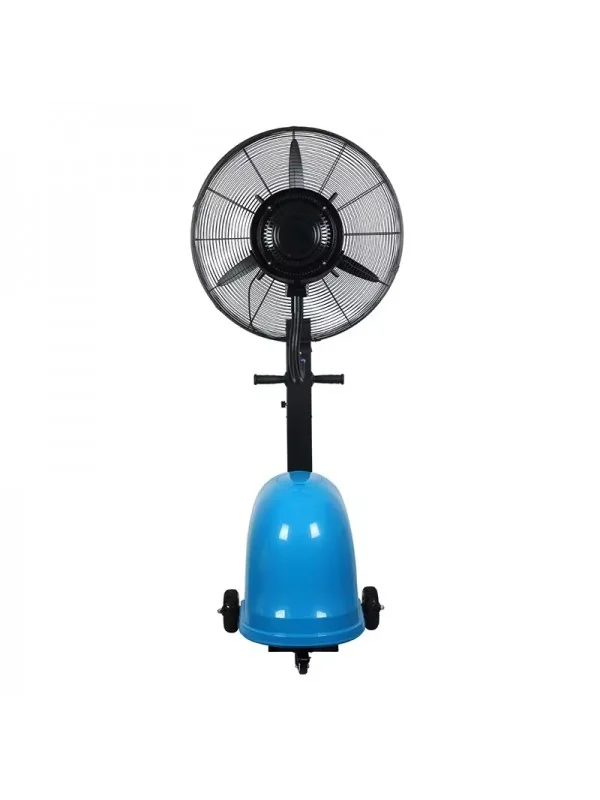
Self-Contained Water Tank Mist Fan
A self-contained water tank mist fan is a mobile cooling unit for locations where a permanent water connection is unavailable or undesirable.
Solution typemist fan, water fan and evaporative mist cooling applications
Focusoutdoor cooling, air comfort and controlled misting
Usagecafes, restaurants, gardens, terraces, hotels, factories, warehouses and event areas
 REAL APPLICATION
FIELD VIDEO • MEGAMIST
See Self-Contained Water Tank Mist Fan in a Real Application
Watch airflow, fine mist distribution and practical outdoor cooling performance related to Self-Contained Water Tank Mist Fan. The video opens inline without leaving the product page.
Inline playbackPrivacy enhancedMobile optimized
What Is a Self-Contained Water Tank Mist Fan?
This type of unit carries its own water reservoir, fan and misting mechanism in one mobile body. Staff can position it near the target zone, fill the tank and operate it without installing a long water line. It is particularly relevant for seasonal venues, temporary events and layouts that change during the day.
Matching Tank Capacity to Daily Operation
Tank size should be evaluated together with actual water output and operating hours. A larger tank may reduce refill frequency but increases total weight and may be harder to move through narrow doors, ramps or uneven outdoor surfaces.
Refilling should use a clean source and should not interrupt service paths. The location for draining, cleaning and storing the unit is also considered so water does not remain stagnant between operating periods.
Correct model selection
Independent water storage allows rapid use in areas without fixed plumbing.
Professional positioning
Mobile construction lets the comfort zone follow changing seating or event plans.
How Does an Integrated Tank Mist Fan Work?
An internal pump or atomizing system draws water from the reservoir and delivers it to the misting section while the fan moves air. Controls may allow fan speed, oscillation or mist output to be adjusted. The exact mechanism and permitted water additives must be confirmed from the selected model’s instructions.
Outdoor cooling support
Semi-open business areas
Nozzle-assisted misting
Strong air circulation
Selecting a Self-Contained Mist Fan
Check tank volume, estimated run time, fill opening, drain point, wheel and brake quality, overall dimensions, cable length, controls and access to filters or atomizing components. Staff should be able to complete routine tasks without dismantling the unit.
The storage plan matters as much as the operating plan. The unit should be protected from freezing, long-term standing water, accidental impact and unauthorized movement when it is not in use.
Selection note: For tank-fed mist fans, assess mobility, tank capacity, refill access, expected runtime, floor stability and the distance to the occupied zone.
Application process
Mobile Tank Fan Deployment Process
Daily movement and water handling are built into the site plan before the unit is selected.
Access and Storage Review
Measure doors and ramps, inspect floor condition and identify secure off-hours storage.
Runtime and Refill Estimate
Compare tank volume with expected water output and choose a refill schedule that fits operations.
Position and Cable Plan
Set the operating point, oscillation angle and power route without blocking guests or service staff.
Cleaning and Seasonal Care
Define draining, tank cleaning, filter checks and winter or long-term storage procedures.
Related services
Compare Self-Contained Water Tank Mist Fan with Related Fan Solutions
Review the related pages to distinguish self-contained water tank mist fan from other water-assisted, misting and industrial airflow options.
Frequently asked questions
Self-Contained Tank Mist Fan Frequently Asked Questions
These questions cover the mobility, refill and hygiene considerations unique to integrated-tank units.
Is a fixed water connection required?
Not for a genuinely self-contained tank model. The exact configuration should still be verified before purchase.
How long does one tank last?
Runtime varies by tank volume, mist output and operating mode; it should be confirmed from the selected model and real duty schedule.
Can the fan be moved between areas?
Yes, when the route and floor are suitable and movement follows the manufacturer’s safety instructions. A full tank significantly increases weight.
Should water remain in the tank overnight?
Follow the equipment instructions. Regular draining and cleaning may be required to prevent stagnant water and deposits.
Can fragrances or chemicals be added?
Only substances explicitly approved for the equipment and application should be used. Unapproved additives can create health, corrosion or nozzle problems.
What should be checked before ordering?
Confirm dimensions, tank capacity, movement route, storage, refill source, power access, operating hours and service support.
Quote and contact
Plan Refill, Movement and Storage Before Ordering
Share photographs of the operating and storage areas together with door widths, daily hours and refill access so the mobile unit can be matched to the routine.
CONTACT NUMBERS
0 (532) 282 84 860 (212) 546 55 46