
It is often compared by frame strength, motor duty, airflow reach and mounting options rather than by domestic comfort features.
Premium Mist Cooling Solution
Industrial-Type Fan
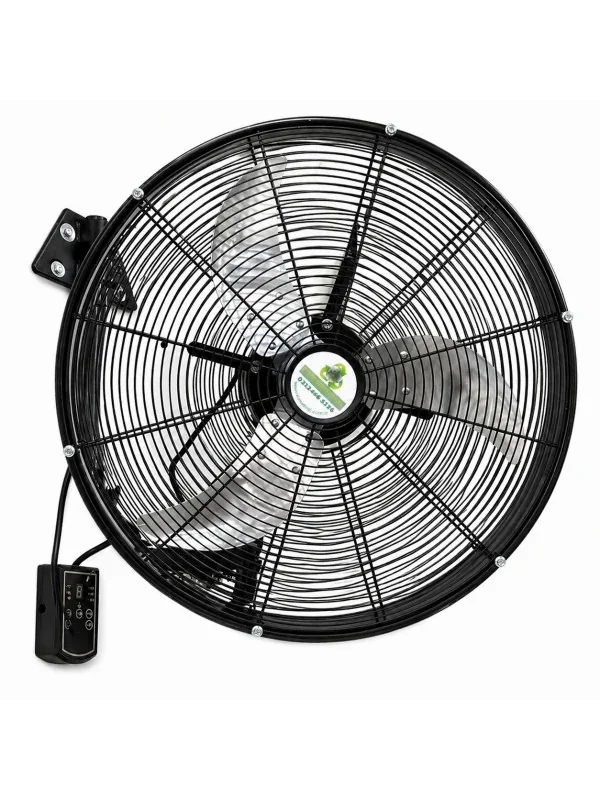
An industrial-type fan is intended for high-airflow use in workshops, warehouses, logistics areas and production buildings where equipment must be robust, easy to position and suitable for repeated operation.
Solution typemist fan, water fan and evaporative mist cooling applications
Focusoutdoor cooling, air comfort and controlled misting
Usagecafes, restaurants, gardens, terraces, hotels, factories, warehouses and event areas
 REAL APPLICATION
FIELD VIDEO • MEGAMIST
See Industrial-Type Fan in a Real Application
Watch airflow, fine mist distribution and practical outdoor cooling performance related to Industrial-Type Fan. The video opens inline without leaving the product page.
Inline playbackPrivacy enhancedMobile optimized
What Defines an Industrial-Type Fan?
Industrial-type fans use a reinforced body, protective guard and higher-duty motor configuration for professional spaces. They may be placed on a heavy pedestal or attached to a suitable wall or structural point. The term describes the use class; final suitability still depends on environmental conditions and the required operating schedule.
High-Volume Air Movement for Operational Zones
These fans are often used to direct airflow toward loading bays, assembly stations, storage aisles or temporary work areas. Positioning should account for forklifts, overhead doors, shelving and production equipment that can block or redirect the air stream.
Continuous or long-shift use increases the importance of motor temperature, vibration control, guard security and maintenance intervals. The selected model should have service and spare-parts support appropriate to the expected duty.
Correct model selection
Heavy pedestal designs provide flexible positioning while maintaining a stable base.
Professional positioning
Wall-mounted arrangements release floor space but require verified structural anchoring.
How Is an Industrial-Type Fan Positioned?
The fan is aimed to move air along a productive route rather than simply at the nearest person. Angles are adjusted to avoid short-circuiting airflow back through open doors or opposing another fan. In multi-unit layouts, each fan is given a defined role within the overall circulation pattern.
Outdoor cooling support
Semi-open business areas
Nozzle-assisted misting
Strong air circulation
Choosing a Heavy-Duty Fan Configuration
Evaluate motor duty, airflow control, guard spacing, frame and base stability, oscillation, cable protection and the ease of cleaning. Check whether dust, oil mist or elevated temperature requires a different enclosure or a specialized product.
For wall installation, bracket geometry, fasteners and substrate condition must be verified. For mobile units, wheel or base stability and safe movement around vehicles and materials are equally important.
Selection note: Compare airflow, oscillation, frame stability, electrical conditions and safe placement around people, equipment and circulation routes.
Application process
Heavy-Duty Fan Planning Process
The installation is planned around traffic, structural support and the actual duty cycle.
Operational Zone Mapping
Mark loading routes, machines, shelves, personnel stations and doors that influence airflow.
Configuration Choice
Compare pedestal, mobile and wall-mounted options against floor space and structural conditions.
Risk and Duty Review
Check environmental exposure, operating hours, cable routes, impact risks and safe clearances.
On-Site Adjustment
Set angle and speed, observe airflow around obstacles, and document inspection and cleaning intervals.
Related services
Compare Industrial-Type Fan with Related Fan Solutions
Review the related pages to distinguish industrial-type fan from other water-assisted, misting and industrial airflow options.
Frequently asked questions
Industrial-Type Fan Frequently Asked Questions
These points explain how heavy-duty fan selection differs from choosing a domestic or office fan.
What makes a fan industrial type?
It is generally designed with a stronger frame, guard and motor duty for professional environments, but the exact rating must be confirmed from the model documentation.
Should I choose a wall or pedestal model?
Wall models save floor space and suit fixed zones; pedestal or mobile models are easier to reposition when workflows change.
Can it run throughout a work shift?
Only when the selected model’s duty rating, environmental limits and maintenance schedule support the required operating time.
How should the fan be protected from impact?
Place it outside vehicle and material routes, secure the base or bracket, protect cables and maintain the specified clearances.
Does it provide fresh air?
It circulates existing air. Fresh-air supply or contaminant removal requires a ventilation assessment beyond circulation fans.
What is required for a project quotation?
Provide dimensions, photographs, traffic routes, preferred mounting, operating hours, power supply and any dust or heat exposure.
Quote and contact
Select the Industrial-Type Fan by Duty and Layout
Send the work-area plan, mounting options and shift details so the right configuration and quantity can be compared.
CONTACT NUMBERS
0 (532) 282 84 860 (212) 546 55 46